In the world of high-performance sealing, Viton (FKM) is a household name. However, "Viton" isn't just one material—it's a diverse family of fluoroelastomers. When Viton A (general purpose) and Viton B (acid resistant) reach their limits, understanding the specific hierarchy of chemical resistance is essential for preventing seal failure.
The "step up" in performance is typically driven by two factors: increased fluorine content and specialized polymer structures.
The Immediate Upgrade: Viton F
When your application involves aggressive fuels or concentrated acids that degrade standard grades, Viton F is the logical next step.
Best For: Oxygenated fuels (methanol/ethanol blends) and concentrated inorganic acids.
The Science: It boasts a higher fluorine content (approximately 70%) compared to the 66% found in Viton A. This creates a denser "chemical shield" that significantly reduces swelling and permeation.
The "Problem Solver" Grade: Viton Extreme (ETP)
Standard Viton grades (A, B, and F) share a common "Achilles' heel": they are famously vulnerable to amines, ketones, and strong bases. Viton ETP was engineered specifically to bridge this gap.
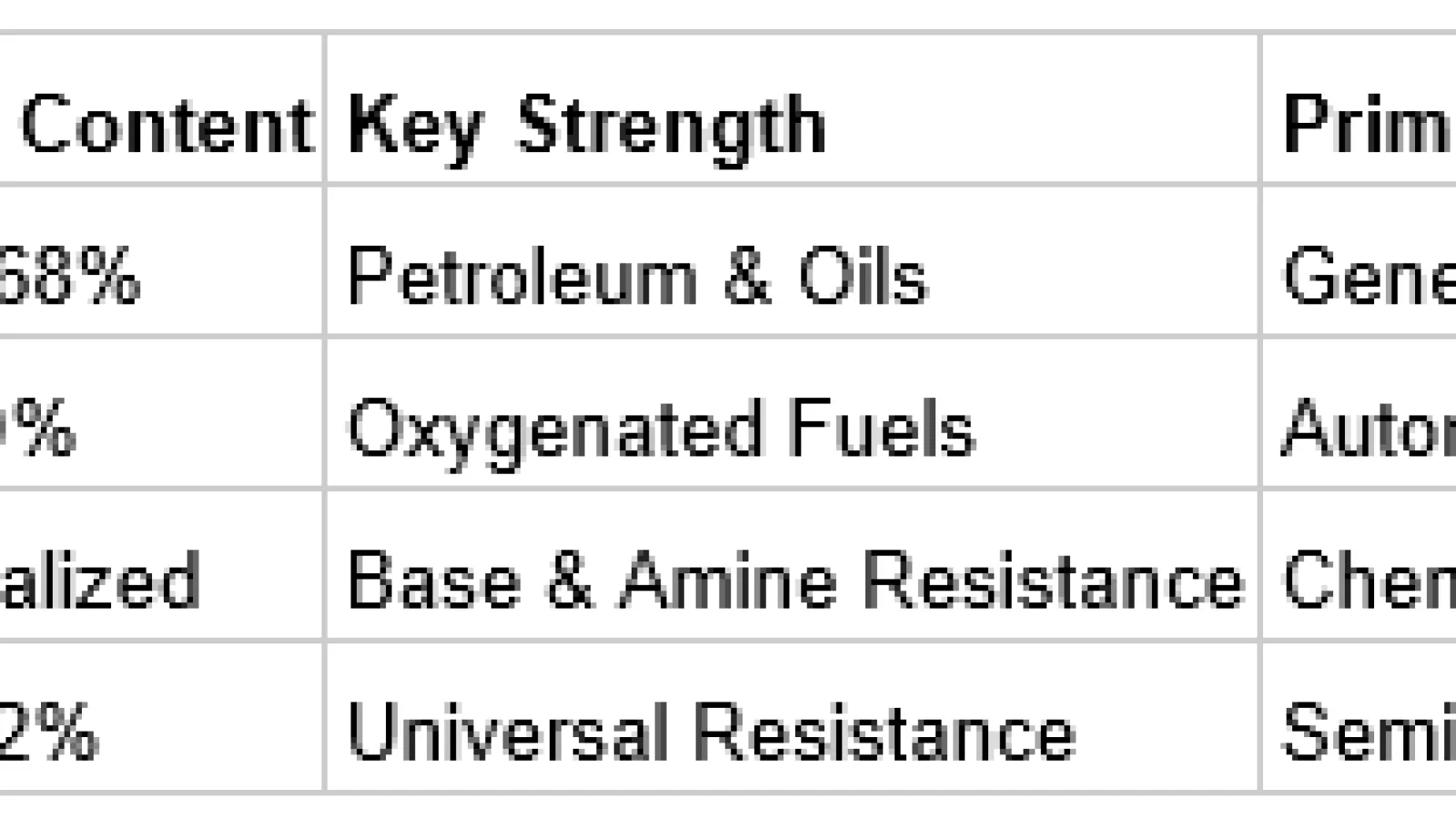
Best For: High-pH fluids, caustic cleaning solutions, and low-molecular-weight esters or aldehydes.
The Science: By utilizing a unique monomer structure, ETP prevents the chemical "melting" and extreme swelling that occurs when standard FKMs encounter alkaline environments.
The Ultimate Material: FFKM (Perfluoroelastomer)
When even Viton ETP cannot survive the environment, the industry turns to FFKM (often known by brand names like Kalrez or Chemraz). This is the absolute pinnacle of elastomeric technology.
Best For: "Nearly universal" resistance. It is effectively impervious to almost all acids, bases, solvents, and even plasmas.
The Science: FFKM is fully fluorinated. Unlike FKM, which contains some hydrogen-carbon bonds (weak spots), FFKM is comprised entirely of carbon-fluorine bonds. It is essentially a "stretchy version" of PTFE (Teflon), offering the chemical immunity of plastic with the sealing memory of rubber.
Choosing the wrong material leads to more than just a leak; it causes costly downtime and serious safety hazards. If your current seals are becoming soft, gummy, or excessively swollen, your chemical environment has likely bypassed the limits of your current Viton grade.
As you move up the hierarchy of chemical resistance, the investment increases. While a standard Viton O-ring is a premium choice compared to basic rubber, specialized grades like Viton ETP or FFKM can cost 5 to 100 times more per piece. However, this upfront cost is almost always offset by a drastic reduction in maintenance intervals and emergency repairs.
For the most demanding environments, FFKM represents the absolute pinnacle of sealing technology. While standard Viton is excellent for general use, FFKM provides nearly universal chemical resistance and survives extreme temperatures exceeding 600 °F (315 °C)—making it the definitive choice for your most critical applications.