Working Conditions
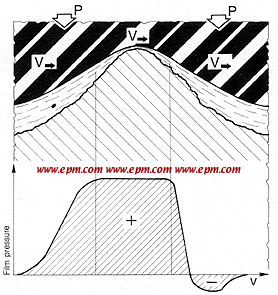
It is very difficult to estimate the maximum speed of a dynamic seal, due to the many functions and factors involved, for example working pressure, fluid viscosity, surface finish, and the seal material resistance to abrasion. As shown in Figure S-1 the optimum sealing friction was experienced at speeds between 0.05 m/s to 0.15 m/s. for speeds lower than 0.05 m/s there is insufficient oil film between the sealing lip and the metal surface, thus allowing direct contact. This produces high friction, rapid wear and irregular stick slip movement. For speeds over 0.5 m/s hydrodynamic pressure occurs, which means the sealing lip is kept away from the metal surface causing fluid leakage.
The basis of friction can be described using Newton's law of viscosity, which relates the shear stress in a lubricant film to the velocity gradient:
- Ï = shear stress
- μ = dynamic fluid viscosity
- v = sliding velocity
- h = lubricant film thickness
Figure S-1 (At the beginning of motion and within certain values of velocity, hydrodynamic pressure forces occur, which means there is a constant lubricating film between the seal and the metal surface. Due to surface finish contours an increase in hydrodynamic pressure will occur maintaining the lubricating film.
Therefore friction is directly proportional to the working pressure. the higher the pressure, the more seal surface area is in contact with the metal surface, and consequently the higher the friction.
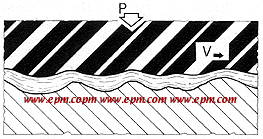
Figure S-2 shows that continuous film of lubricant reduces the deformation force Fd and therefore produces a "leveling" effect on the metal surface.
Updated 9/28/2026